

Bentley Seed Co. Blog

Bentley Seed Co. Blog

The Best Late-Season Crops

by Becca Conklin on Jun 28 2023
As the gardening season begins to slow, it's not time to hang up your gardening tools just yet. Late-season crops provide an excellent opportunity to enjoy fresh produce well into the fall months. Lets explore some of the best crops to grow during the late season.   Best Late Season Crops Leafy Greens Leafy greens such as lettuce, spinach, and kale thrive in cooler temperatures in the later summer season, making them ideal for late-season gardening. These crops can endure light frosts and still provide flavorful leaves. With proper protection like row covers or cold frames, you can enjoy a continuous supply of nutritious greens throughout autumn. Root Vegetables Root vegetables like carrots, radishes, and beets are perfect for late-season planting. These crops benefit from the cooler temperatures, unlike other crops, which enhance their flavor and sweetness.  You should plant these crops about two to three months before the first frost date in your area. Harvesting root vegetables can become easier in the fall because the cooler soil make it less likely that pests will attack the crops. Brassicas Brassicas, such as broccoli, cauliflower, and Brussels sprouts, tend to thrive in the fall season. These crops often improve in flavor after exposure to light frosts. These crops require an extended growing season, so starting these seeds indoors during the summer season is recommended. With proper care, you and your family can enjoy delicious, nutrient-rich brassicas well into late autumn.   Find the Best Late Season Crops with Bentley Seed Co. Late-season gardening can open up a world of possibilities for new or professional gardeners. By selecting the right crops, you and your family can continue to enjoy fresh and nutritious harvests even as the days grow colder. Find the best selection of late season crop seeds with Bentley Seed Co. Our cold weather seed packets contain varieties that are meant for colder harvests and can be planted later into the summer. Bentley Seed Co. is committed to providing safe, high-quality seeds to ensure our customers have an enjoyable and successful planting experience year after year. Shop with us today!

Bentley Seed Co. Blog

Getting Your Kids Involved In The Garden

by Becca Conklin on Jun 21 2023
Gardening is truly one of the best ways to get outdoors, exercise, and relax, but it doesn’t have to be just for adults. We love gardening with our kids, and we want to encourage everyone to involve their kids this summer. Gardening allows kids to get a better sense of where their food comes from and learn important lifelong skills. Keep reading to discover some of the benefits of gardening with kids this summer. Engage Healthy Eating It can be a challenge to get children to enjoy vegetables with their meals, but a garden is a great way to change this. Growing your own food can be exciting and encourage your children to expand their palate. Eating food you grew from a seed makes meals more important and is a great way to add more vegetables to everyone’s plates. Teach Responsibility Gardens are a work of progress that start in the spring and need constant attention until harvest. Learning how to care for your plants properly, from watering to weeding, helps teach responsibility to kids. Working alongside them and developing a routine is a great way to help them learn valuable life skills. Gardening is Science Gardening with kids is a great way to teach your children about the natural world and the science behind your garden. It is one of the top gardening activities for kids, where you can teach them why fertilizing works, how sunlight is converted into energy, what makes leaves green, and so much more. Teaching children about these things early on helps them grow their interests and learn to discover the world around them. Teach Patience A healthy garden doesn’t develop overnight. It takes weeks to get your seeds started and even longer to bring your garden to harvest. Gardening with kids can be a great learning experience that teaches your children how to be patient. It can be exciting to watch the growth, and at the end of the summer, your patience is rewarded with delicious home-grown fruits and vegetables.  Garden With Bentley Seed Co. At Bentley Seed Co, we provide a large variety of seeds for any garden and any age. Our team provides fresh crops, high germination, non-GMO, untreated seeds that are safe for you, your family, and your garden. Shop our collection or contact our team today to find the best seeds for you and your family to start planting together!

Bentley Seed Co. Blog

Prepare Your Garden For Inclement Weather

by Jeff Bentley on May 11 2023
Here at Bentley Seed Co., we love the warmer weather that comes this time of year. What we don’t love, is how unpredictable the weather can still be. If you are curious about how to protect your garden from hail, extreme heat, and drought this summer, continue reading for some helpful tips from our gardening experts. How To Protect Your Garden From Hail Hail can be extremely destructive at any stage of the growing season. Preparing for it ahead of time is the best way to preserve all your hard work. We recommend gathering a few items that can be placed over your plants. This can include tarps, baskets, cages, and blankets. It may not sound like much, but even the smallest amount of protection can make a big difference. Although preparation is ideal, it’s not always realistic. If you are away from home and are unable to cover when hail comes, here are a few tips to follow preceding the storm. Prune your plants to remove any broken or unsalvageable leaves. Add fertilizer for an extra boost to the soil. Check the moisture level of the ground. If wet to the touch, it’s good for the time being. Being sure your plants are not over or under watered in the days following a hailstorm is crucial. Keep in mind that it can take several days to recover from destructive weather. Keep following these steps before giving up. Chances are it will bounce back. How To Protect Your Garden From Heat As many know, a garden needs plenty of sunshine to grow and thrive, but during a severe heat wave, your garden can suffer. When the summer sun is overheating your garden, there are a few things you can incorporate to cool it down. While you might think extra water could cool your plants down, overwatering can be worse for your plants on those sunny days. Make sure to feel the soil first. If it feels wet, your plants don’t need any more water. Another way to prevent your garden from overheating is by adding shade. You can do this with the help of an umbrella, garden shade cloth, or hanging a tarp. Prioritize covering delicate plants first like tomatoes and herbs. How To Protect Your Garden From a Drought If you are in an area prone to drought, having a garden can be tough. That doesn’t mean you have to give up your dreams of growing good things. A few modifications can ensure your plants survive during low to no rain periods. To combat dry conditions, water in the mornings. This will allow the plants to absorb all they need before the sun begins to evaporate the water. Also avoid watering every day. It is recommended to water only 3 days a week. This will help your plants adapt to the dry environment. Lastly, don’t forget about your soil. Plants need to dig their roots into loose, nutrient-rich soil. In a drought, good soil can be the determining factor in the success of your garden. Visit Bentley Seed Co. today to gather all the essential seeds and gardening information for a thriving garden in all climates!
How to Pick the Best Seeds for Pollinators in Your Climate

Bentley Seed Co. Blog

How to Pick the Best Seeds for Pollinators in Your Climate

by Jeff Bentley on Mar 30 2023
Pollinators play a crucial role in the ecosystem by facilitating the reproduction and growth of plants. Without pollinators, many of the fruits, vegetables, herbs, and other crops that we rely on for food would not exist. Pollinators are directly responsible for at least 1 out of every 3 bites of food we eat, which is more than 35% (Alarcón, 2020). Pollinators such as bees, butterflies, hummingbirds, and bats are responsible for transferring pollen from one flower to another, which leads to fertilization and the production of seeds. Some of the best flowers for pollinators are curated wildflower mixes designed especially for pollinators, Sunflowers, Black-eyed Susan’s, Milkweed, Coneflowers, Bee Balm, and more. Wondering how to attract pollinators? Planting seeds for pollinators can provide numerous benefits for both the environment and humans. By increasing the availability of food and habitat for pollinators, we can help support their populations and ensure the continued pollination of plants. This can also help maintain the diversity of plant species and ecosystems, which is important for maintaining a healthy and balanced environment. Additionally, planting pollinator-friendly seeds can enhance the beauty of our outdoor spaces and provide opportunities for learning and educational activities. Get seeds of some of the best flowers for pollinators from Bentley Seed Co.   Steps to choose the right seeds for your climate? Choosing the right seeds for your climate involves several steps: Identify your climate zone: Determine which climate zone you are in by consulting a climate map or by asking a local gardening expert. This will help you choose plants that are adapted to your region's temperature, rainfall, and other environmental conditions. Research pollinators in your area: Research the types of pollinators in your area and their preferences for nectar and pollen. This will help you choose plants that are attractive and useful to these pollinators. Select a variety of plants: To attract pollinators to your garden, it is important to provide a variety of plants with different flower shapes, colors, and sizes that bloom at different times throughout the season. This will ensure a continuous source of nectar and pollen for pollinators. Consider the plant's growing requirements: Choose plants that are well-suited to your local growing conditions, such as soil type, sunlight, and moisture levels. This will help ensure that your plants thrive and provide the best possible habitat for pollinators.   By following these steps and selecting the right seeds for your climate, you can create a beautiful and functional pollinator garden that supports local pollinator populations and promotes a healthy ecosystem. Visit our website today to learn more about how to pick the best seeds for pollinators in your climate!

Bentley Seed Co. Blog

The Benefits of Growing Your Own Food

by Jeff Bentley on Mar 15 2023
Growing your own food is an incredible and rewarding experience that offers benefits for both individuals and our planet. By growing your own food, you can enjoy fresh, healthy produce that is free of harmful chemicals and pesticides. Additionally, gardening is an environmental and educational practice that reduces your carbon footprint and increases appreciation of where food comes from. Finding ways to connect with nature has a huge impact on human health and wellness. Even if your garden is small, the benefits of growing your own food can be impactful. Gardening is an activity that can be done at any stage of your life and is truly for everyone. Learn more about the benefits of growing your own food! Enjoying Fresh Produce Gardening makes eating healthy easier by supplying your table with fresh, healthy produce picked straight from the vine. Vegetables, fruits, and herbs start losing their nutrients and flavor after they’re picked. When you grow your own food, you can harvest at peak ripeness, ensuring maximum freshness and flavor. Growing your own produce in a garden, supplies you with fresh, healthy options for the table and promotes healthy habits of eating fruits, veggies, and herbs. Health Benefits As mentioned above, growing your own fruits, veggies, and herbs is great for your health and provides so many benefits because you control what goes on, and in, your food. When purchasing fruits and vegetables from the store, there may be added chemicals or pesticides. Having the autonomy to grow what you want, via the methods of your own choosing, you can address what works with your diet and health conditions. Having a healthy and diverse selection can help with blood pressure, heart health, gut health, and much more. The options are endless when you are able to grow your own healing elements year-round! Cost Savings One of the benefits of growing your own food is the amount of money it can save you and your family. Investing in seed and gardening supplies allows you to grow as much, or as little as you want, thus reducing waste. Growing fruits, veggies, and herbs at home can also cut your produce bill by as much as half. Environmental and Educational Benefits When growing your own produce, you are avoiding harsh chemicals and pesticides that may harm the environment, especially pollinators. Plus, you are reducing your carbon footprint by avoiding trips back and forth to the store. Educating yourself and your family on the environmental benefits of growing your own food can help our planet and instill an appreciation of where food comes from. The advantages of growing your own food and natural eating habits really is a win-win all around. At Bentley Seed Co, we provide a large variety of seeds for any garden in any climate. Our team provides fresh crops, high germination, non-GMO, untreated seeds that are safe for you and your garden. Shop our collection or contact our team today to find the best seeds for you and your family!

Bentley Seed Co. Blog

Are You Ready for Spring Planting?

by Jeff Bentley on Feb 22 2023
Nothing reflects our impatience with winter quite like our eagerness to plant an early spring garden, but success lies in timing, knowledge, and preparation. We love nothing more than helping gardeners grow their best plants, so we're outlining our advice on early spring gardening so that you'll know just what to grow and when. Soil preparation is key to successful spring planting. Make sure your soil is tilled and mixed with organic matter (compost) at a ratio of two inches of matter per six inches of soil. Group Vegetables and Knowing When and Where to Plant In order to know what will and will not thrive in your area, it’s crucial to first understand your area’s climate. This is especially important when living in a climate where there is a danger of frost. Starting specific seeds indoors during the winter and then moving them outside for the warmer months can save your gardening efforts. If you have plants that have to remain outside, gardening with raised beds, adding extra mulch to the base of the plant, building a cold frame or greenhouse, or covering your plants with a sheet or cloth can be simple ways to protect your gardening efforts during the colder months. During spring planting, vegetables can be divided into two groups. Vegetables in Group 1 can be planted around Valentine's Day and have two subgroups: those to be started outdoors and those to be started indoors. Vegetables in Group 2 should be planted two to three weeks later and are all started outdoors. All these vegetables are planted from seeds. Group 1 : Outdoor Vegetables : Kale, Collards, Radishes, Peas, Onions, Spinach, Lettuce, and Turnips Group 1 : Indoor Vegetables : Cabbage, Broccoli, Cauliflower, and Brussel Sprouts Group 2 : Later Planted Vegetables : Beets, Carrots, Beans, Swiss Chard, Arugula You May Still Have to Protect Those Tender Shoots Although all these vegetables perform best in cool to warm weather, they don't tolerate frost well, so you will have to cover them once they sprout if the temperature dips or harsh conditions are in the forecast. Severe winds will also destroy tender sprouts. Be especially mindful of this until Memorial Day, by which point you should be in the clear. Trust Bentley Seed Company to Supply Your Seeds At Bentley Seed Company, we've been in the business of growing good things since 1975, and we would love to help you grow a successful garden this year. Our seeds are non-GMO and come from the very best sources. New users have used Google, Amazon, and our product reviews to explain how easy our growing process is. Our growing instructions on each packet are easy to follow so you can jump right in. Check out our guide for planting indoors and outdoors, or contact our team of experts today!
Germination 24 Years later, a Mother Daughter Story

Bentley Seed Co. Blog

Germination 24 Years later, a Mother Daughter Story

by Jeff Bentley on May 05 2021
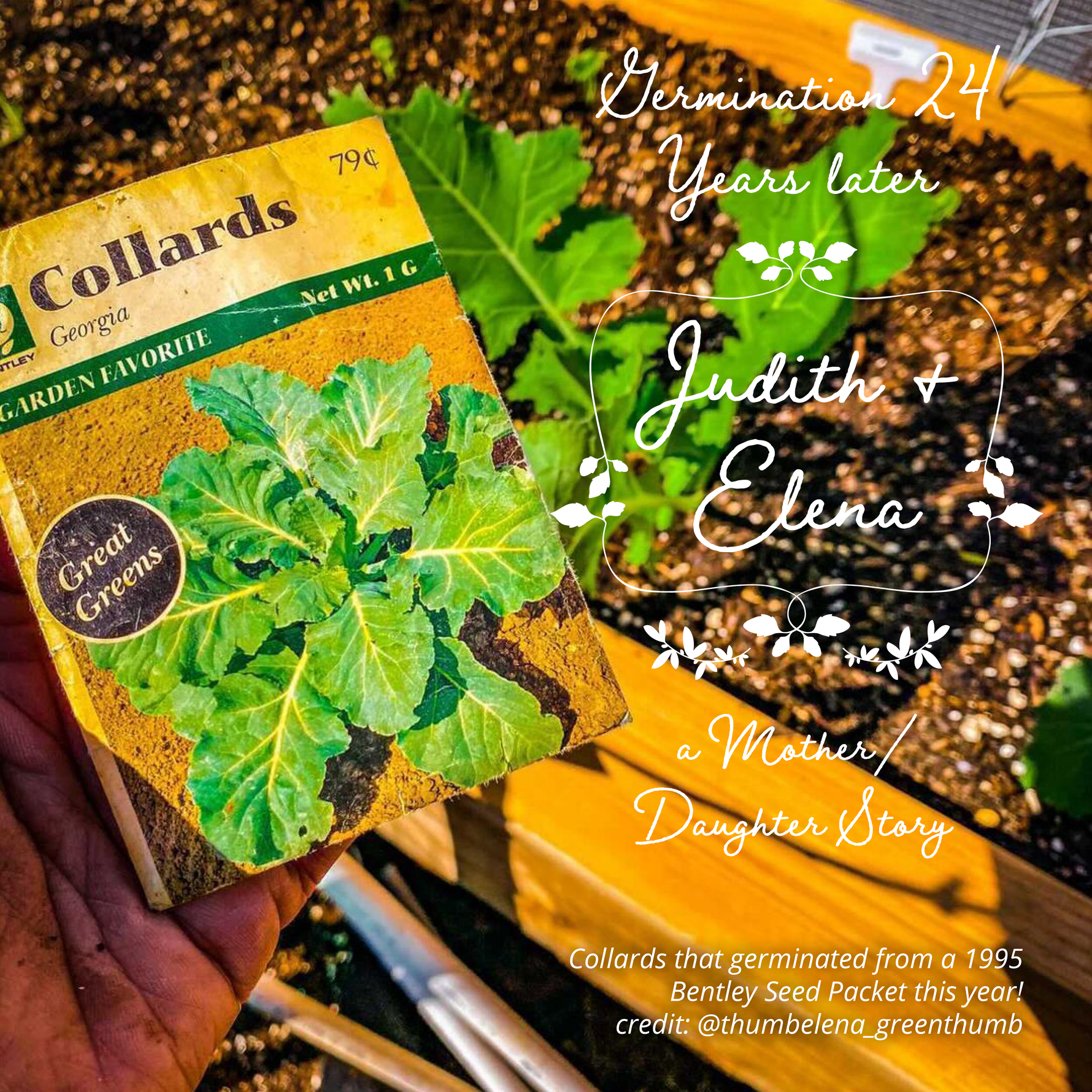
  We recently received a message from Elena in Oakland, CA- @thumbelena_greenthumb. She said: “Hi there, I just wanted to reach out because I am amazed by your seeds germination ratio. My mother Judith passed away 24 years ago and had collected seeds. I found many packs she had over the years and just wanted to send this to you. Here is a pack dated 1995 and all of the collards I sowed germinated from her pack! These packs have helped our family keep a very special part of her going and that’s her garden.” From our CEO Jeff Bentley: “To have a seed germinate and grow after 25 years is truly a miracle. We are thrilled this happened with our seed and that it brought joy to Elena. ” Elena and her mother Judith's story truly touched us here at Bentley Seed, and we are honored she has allowed us to share her experience with you. .